Monday, May 27, 2019

Fukuoka and Hakata Ramen

Well, we're back! As usual, the end of the school year is far more frantic than it should be, and we found ourselves on a plane across the ocean with a bunch of work still to be done. I spend about 8 hours of the flight grading, and am almost halfway done...but the good news is, we landed in Fukuoka yesterday evening to start this year's cycling trip!

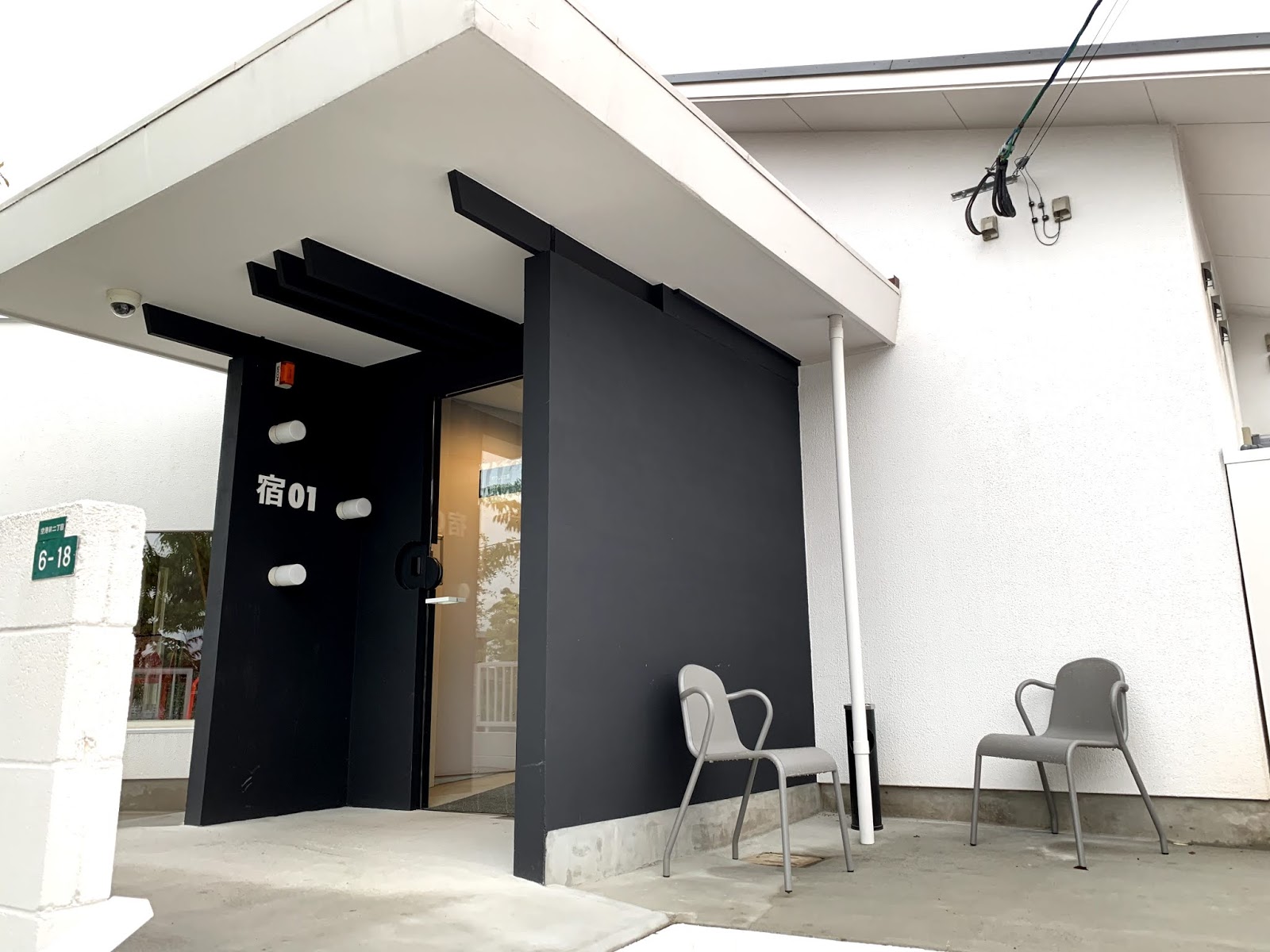
Getting here was a bit of a haul. We arrived in Chicago Friday night to park the car and work, Saturday we flew from O'Hare to Narita, arriving Sunday afternoon thanks to the International Date Line, a three hour layover, then another hour and a half flight to Fukuoka. Once we arrived, we dragged all of our stuff about 1/4 mile to Yado 01, a nice hostel with small rooms, shared baths, and decent Internet. After about 18 hours of travel, we crashed pretty quickly.

A view coming up the hill

Nice 


The following morning, we attempted to get our WiFi hotspot working. Actually, we attempted to open the bag it came in. The zipper was jammed, and all pulling on it did was break the tab off the zipper. A quick google search yielded all sorts of ways to unstick a zipper, most of them involving quite a mess. We opted for the graphite pencil trick (spread a lot of graphite on both sides of the zipper. And pull). So, a quick stop at Lawson for some breakfast and pencils and we headed back, hopeful we would have our hotspot.
Japan: The only place in the world where a convenience store pencil comes sharpened like a weapon and has its own plastic cap. For a pencil. 
As it turns out, the graphite pencil trick was not all it was cracked up to be, so we opted for Plan B: Scissors. While I'm sure the cell phone company will not be pleased with the sizable, if neat, slit in the side of their nice cloth bag, we do have our hotspot.

Armed with Internet and a day to spend in Fukuoka (we shipped our bags to Amakusa, where we will be starting our trip, but it takes a day or so for them to get there), we decided to explore some of the museums the city is known for...only to realize today is Monday, and most government facilities are closed on Mondays. Luckily for us, The Hakata Machiya Folk Museum is only closed on the fourth Monday of every month...which today also happens to be.

So, braving the coming rain, we set out of visit the Fukuoka Castle Ruins, which is located on the west side of the city among a group of parks. Castle Ruins can be anything from half-standing structures to mounds of dirt in a castle-like pattern. Fukuoka Castle is in between. There are a number of impressive walls still standing, and a few of the 47 turrets and a gate still remained, but most of the castle has vanished, via disuse and/or fire. The moats surrounding the castle grounds are still intact, and very impressive.


To the east of the castle is Ohori Park, a larger park with a nice pond that has several bridges connecting a small island in the center of the pond. There was a good amount of wildlife around, including cormorants, herons, turtles, and, of course, koi. These koi were massive.
This koi is at least three feet long. This is what happens when you don't let the locals fish!

Lots of Japanese Pond Turtles (their actual name) also inhabit the pond.
Fukuoka wants to be known as Flower City, and have a motto 一人一花 (one person, one flower). It loses something in the translation, but they did have a large number of flowers throughout the city, and in the garden, we saw some that we'd never seen before. Not being much of a flower kind of guy, I wasn't very surprised by this, but nevertheless, they were pretty cool looking.
Just a typical roadside garden 
Almost looks painted inside
The island in the center of the pond has a nice Japanese garden-style gazebo, which is one of its more famous landmarks and perfect for selfies and the like
One of the bridges connecting the island to the mainland

Approaching the gazebo
Not our picture. Too many people taking selfies and grey clouds for a good one.
After visiting the island, we decided to head towards Hakata, the neighborhood in Fukuoka made famous by their tonkotsu ramen, pork-bone based ramen soup. It was a bit early for lunch, so we stopped at Kushida-jinja, a famous shrine that dates back to 757 AD. Fukuoka's largest festival, the Yamakasa Gion Matsuri starts here. That festival lasts for two weeks and is famous for the final day race, where seven teams from the seven neighborhoods of Fukuoka race while carrying enormous parade floats, leaving from Kushida-jinja. One of these floats is currently on display at the shrine. It was quite nice and spread out a bit, containing some eclectic artwork and architecture.


In all the shrine we've been to, I've never seen one of these before. A traditional Chinese dragon.

Front side of one of the floats. People for scale.

Rear side of the same float. They weight a bit over one ton.
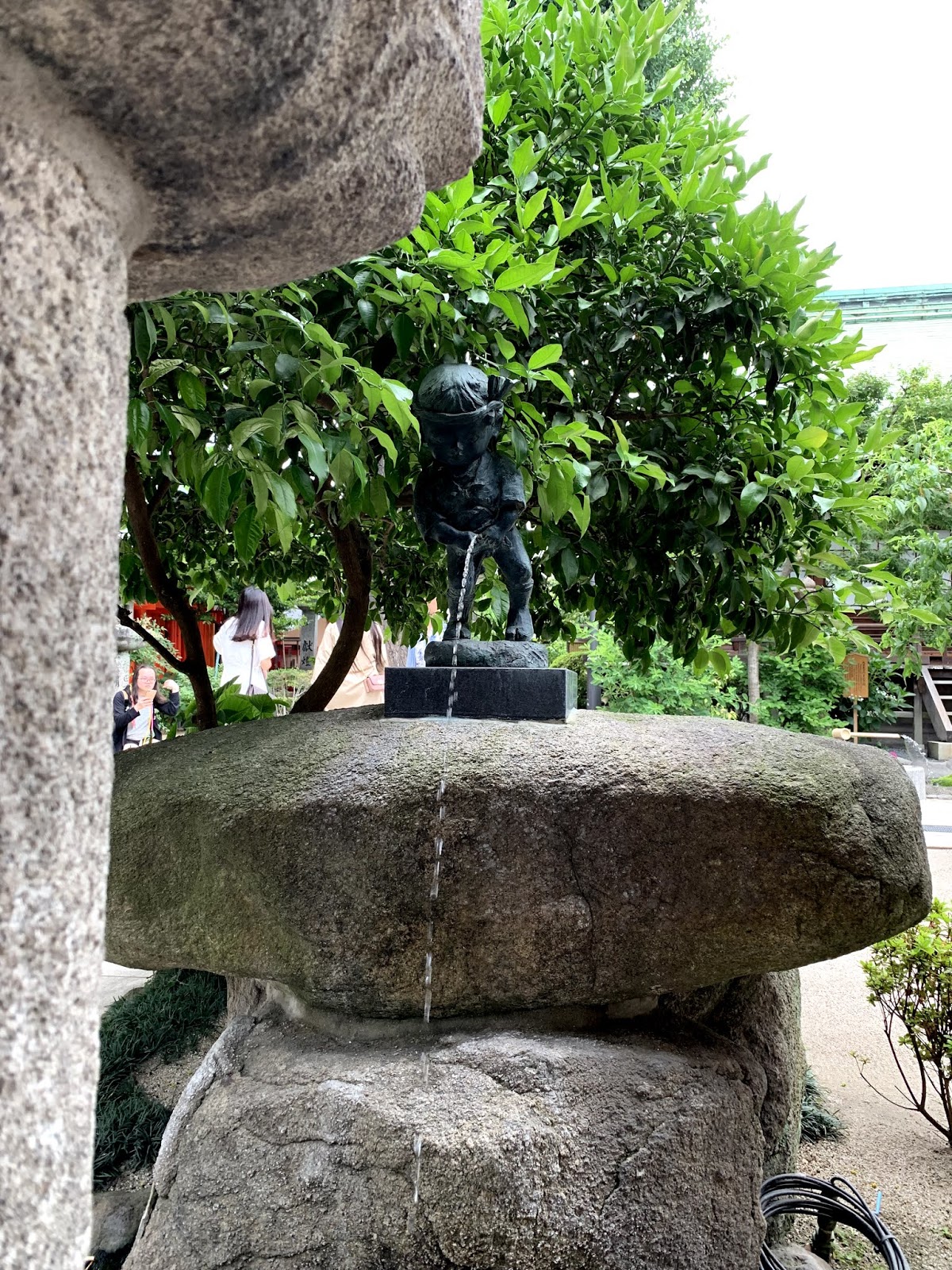
Nothing quite says ancient artistic culture quite like a peeing fountain


After visiting Kushida-jinja, we still had a little time to kill before lunch, so we stopped at the Hakata Traditional Craft and Design Museum, which had a small but nice collection of blown glass art, handmade dolls, etc. You were only allowed to take a picture of one of the dolls, the rest of the museum being off limits. Unless you are Sumi and can't see signs in English prohibiting pictures. Then you take a bunch before your embarrassed husband stops you. They did have a picture on their web page that gives a sense of the items in the museum, so I figure it's ok to post that


This guy is the only picture you're allowed to take. No idea why.
Finally it was time for lunch. We opted for what was voted the best Hakata Ramen in Fukuoka by the residents of the town, and that is pretty high praise. Hakata Issou is relatively new, but boast the "Longest Lines" in Fukuoka. It's a tiny shop with about six tables and a bar that seats five or six. True to their word, there was a line at 12:30, in the rain, to get into the shop.
Sumi is hungry and not amused
The ramen is unique in that it is constantly transferred from pot to pot while cooking, giving in a frothy look that has been dubbed Ramen Cappuccino.
Ramen and Rice Set
It's pretty light, as Ramen goes, and fairly tasty. But what pushed it into amazing was the fresh garlic cloves at the tables. There was a container with a bunch of peeled cloves and a garlic press. We shared a clove, and the fresh garlic mixed in with the light broth and al dente noodles was really something else. Sumi and I are self-styled Hakata Ramen connoisseurs (Ichiran being the best, due to its customizability), and this place is one of the best.

Full and tired, we headed back to Yado 01 so I could get my grading finished. Of course that means I promptly fell asleep. For eight hours. I woke up and 9pm wide awake and proceeded to work for the next nine hours finishing up all of my grading for the year. Finally done and ready to actually be on vacation, Sumi and I headed to the train station to catch the early Shinkansen to Kumamoto.
Thursday, June 7, 2018

Over the river(s) and through the concrete jungle to Miyajima

We some sadness, we prepared this morning for our last ride of the vacation. Packing everything up into our backpacks one last time, we checked out of the hotel, climbed aboard our bikes, and set out for the ferry port on the far southwest side of town. Since we had until 3pm before we could check in to our hotel in Miyajima, we decided to stop at Hiroshima Castle, which we had yet to visit.
Impressive, and under construction
The old castle was destroyed by the bomb, though the foundation was still solid. The current castle, built in 1951, is a mixture of the original design and some modernizations to make it a good museum. Inside, there were a lot of exhibits showing the history of the region of Hiroshima, as well as the castle history. One of my favorite bits of knowledge from this visit is that during the Shogunate, merchants in the castle-town of Hiroshima were taxed based on the width of their shops. This resulted in a lot of very deep, very narrow shops. Gotta love medieval merchants gaming the system!

After the castle, we wove our way through the city. Hiroshima has, in my best estimation, 468 rivers flowing through it, and each one has only two bridges, and those bridges are not connected by any single road. I'm fairly certain we crossed each one at least once on our way out to the ferry port. As expected, it took several hours to travel the 17 miles to the ferry port. We arrived, sweaty and sticky (it wasn't raining, but the humidity was still near 100%) and desperately in need of some nutrition. The ferry station had...

Mango/Orange and Momiji Manju Soft Cream. That's nutrition!

Peach Coke? Well, peaches are nutritious...
Momiji Manju is a local specialty of Itskushima (the region we are in). It is a cake shaped like a maple leaf and filled with red bean paste. The ice cream had both red bean and maple in it. It was amazing. The peach coke? Well, I had to at least try it. I can now say I've tried it. We decided to wait on a real meal until we get settled in at our hotel.

Boarding the ferry with our bikes was surprisingly painless, and soon we were on our way to Miyajima! It's a short, 10 minute ride from the mainland.
Happy to be almost there

The torii (gate) of the Itskushima shrine is partially submerged during high tide
Arriving at Miyajima, there were a lot of tourists...
Waiting in line for a tabl...wait, what?
and deer. The Miyajima deer (Japanese Deer, much smaller than the North American White-Tailed Deer). They are all over, and they are not afraid of people. Luckily, they are friendly and curious, but they also know people have food, and are not smart enough to realize your paper map (or money!) is not food, since it looks like leaves to them.

We checked into our hotel, Sakuraya, cleaned up, then turned around and headed back to the mainland for dinner. Miyajima is a tourist island, and the food is both expensive and almost entirely seafood, so really not much in the way of choices for two slobs with nothing but biking clothes. So we rode the ferry back across and walked a few blocks to Cafe Gusto, a chain restaurant. Sumi ordered spaghetti, because that's what you do in Japan, and I ordered their "Beef Cut Steak", which is thin slices of beef that you grill yourself.
The garlic sauce was strong, and yummy
Feeling full, we headed back to Miyajima to watch the sun set. It was a peaceful, intimate affair with about 50,000 of our closest friends and their children. Actually, there were a number of overnight school trips, and they ALL needed their pictures taken at the gate. Luckily, we got there early enough to enjoy the sunset before being invaded.


Tomorrow is entirely dependent on the weather. Rain is in the forecast, but depending on the amount, we may or may not get to climb Mt. Misen and visit the shrines at the top.

Wednesday, June 6, 2018

The Peace Memorial and Kagura

As expected, it was raining when we woke this morning. We lazed around in our room for a good long while, deciding what to do today. Eventually we got our butts moving and headed to the station.
In the US, there would be protests...


We got our JR Passes for the train rides we'll be taking the rest of the trip, reserved some seats on the Shinkansen for Saturday, then headed to the tram station to catch the local train to the Peace Memorial Museum area, where there are a number of places of interest. First up was the old Hiroshima branch of the Bank of Japan. It was one of the reinforced concrete buildings that was blown out and burnt, but remained standing after the bomb. It has been converted into a museum filled with personal stories not just of the atomic bomb, but of other bombing survivors around the world. There is no English here, so it was a bit of a struggle for us to follow some of what was being said, but the overall impact was felt.

After the Bank, we visited the Peace Memorial Museum. We had visited this on our last trip to Hiroshima, and I was interested in revisiting it. Sadly, the museum was under "renovation and earthquake-proofing", so the exhibits had been moved to a much smaller side building. They were still there, and there were some new exhibits, which was nice. Unfortunately, about 45 minutes into our visit, every middle school in Hiroshima took a field trip to the museum. As the space was much smaller than the regular museum, it got very full and very loud very quickly. We decided we'd had enough, and headed out towards the Peace Memorial itself
Obligatory memorial photo, but still nice

The Prefectural Industrial Promotion Hall. The building at the center of the bomb detonation and the only structure that was still standing afterwards. Now the "Genbaku Dome" is a symbol of the destructive power of nuclear weapons.
It was raining pretty steadily at this point, and we were hungry and tired (the week catching up with us, I think). So we had a conversation about where to eat. It went something like this:

Me: Well, we could try some Gyuudon or Okonomiyaki?
Sumi: Let's get some gyoza!
Me: OK, but maybe that place we passed yesterday?
Sumi: I want gyoza!
Me: How about...
Sumi: GYOZA!

And thus we found ourselves at Gyoza no Oushou, a chain of Gyoza restaurants that serve Chinese-inspired dishes, as well. Sumi did get her gyoza and some tonkotsu ramen, while I had the "Service Lunch" special, which on Wednesdays was spicy tonkotsu ramen and a version of omuraisu (omelet served over or stuffed with rice).

Generally Oushou is great at gyoza and meh at everything else, but the ramen was quite good, and the rice and egg concoction wasn't bad either. Full and sleepy, we headed back to the hotel for a nap....

Three hours later our alarm woke us up (good thing we set one). We roused ourselves and stumbled out to the train station to get ourselves to an evening of Japanese culture. Well, sort of. We were going to see a Kagura performance. Kagura is a form of ritualistic dance that dates back well over 1000 years. It was originally sacred dances performed by miko for the imperial court, but have evolved to a great degree, and there are multiple types of kagura. We were going to see Izumo-ryuu kagura, which is more of a dance tradition that enacts old folk tales. Every Wednesday night from April through December, there is a kagura performance in Hiroshima. Well, it was Wednesday, it was June, we were in Hiroshima. Kagura it is.

Of course, on our way to the show, the Hiroshima Carp faithful were trooping back to Mazda Zoom Zoom stadium, hoping this game wouldn't get rained out. They weren't alone...
What the...?

Lawson konbibi's mascot. A dancing squirrel, Mr. Popo
Yup, just another day in Japan.

The kagura was at a very nice local cultural performance hall. It consisted of four musicians (chuu-daiko, shime-daiko, chappa, and fue) and the dancers.
All of the costumes were hand-embroidered

The big battle!

Archers save the day!
The musicians were very good. The fue (flute) player, as we were told after the performance, was a 9th grader! These troupes are people who do this in their spare time, and she was as good as many professionals I have heard. The dancers...danced. I confess I am not much of a dance connoisseur. I did learn several important cultural details of import, however. I learned that people in ancient Japan walked in circles. A lot. And that when you fight a supernatural being, it requires both extended exposition by said being and a dance-off of at least five minutes.

All kidding aside, it was an interesting performance, and we were glad we went. But it was now 9pm, and well past our bedtime. We headed back to the hotel and called it a night. Tomorrow is our last cycling day as we go cross town (not a trivial ride) to the ferry port and visit the great temple island of Miyajima!